Land Thursday, ride the Riviera's benchmark climbs Friday and Saturday, spin the Col d'Èze on Sunday morning, and still make the evening flight. One seafront base, sea-level starts, and the roads half the peloton trains on.
"You are one ride away from a good mood."
Sea level to nine hundred metres in the time it takes a coffee to go cold. That is the trick Nice plays. The Promenade des Anglais runs flat along the Baie des Anges, and behind it the arrière-pays climbs straight up: benchmark cols, wild limestone backcountry, and the same ridge roads the WorldTour rides on a Tuesday. Four days is enough to taste all of it. You do not change hotels. You barely change gears getting to the start.
Arriving on the coast
Nice Côte d'Azur sits right on the water, roughly seven kilometres west of the old town. Direct flights land from most of Europe, the tram runs from the terminal to the port in under half an hour, and the seafront cycle path starts almost at the runway. This is the rare cycling trip where you can be spinning your legs the same afternoon you land.
Get in Thursday afternoon, build the bike or collect the hire, and don't do anything ambitious. Roll east along the Promenade des Anglais, round the Quai des États-Unis, and out to Villefranche-sur-Mer and Cap Ferrat: fifteen flat, glittering kilometres to shake the flight out of your legs and check the gears actually shift. Eat early. Friday is the big one.

Where to base yourself
You want a few things from a Nice base for a riding weekend: an easy spin to the seafront path, somewhere secure for the bike, and a walk home from dinner. Star rating matters less than whether you can wheel a bike through the lobby without a raised eyebrow. Two picks in the Musicians' quarter, both a few minutes from Nice-Ville station and a short roll from the sea.
Bike rental
Nice is one of Europe's busiest road-cycling hubs, so the rental scene is deep and the bikes are current. Book ahead anyway, especially over a weekend and in spring and autumn peak. Reserve compact or wide-range gearing if you want it: the climbs are long rather than brutal, but sea-level starts mean you feel every metre.
The Rides
Three climbs, in the order a weekend handles them best. The Madone on Friday, on legs that are fresh but not yet sharp, because it is the one you came to measure yourself against. Col de Vence on Saturday, into the wild limestone backcountry, for contrast and for the day the trip stops being about the coast. Col d'Èze early on Sunday: short, iconic, and finished in time to shower, pack, and fly.
None of these are altitude climbs. They top out under a thousand metres and they start at sea level, which is the whole character of riding here: you climb out of the Mediterranean, not down into a valley. The gradients are honest rather than savage. What tires you is the constancy and the sun, not the ramps.
Shuffle the order if the weather forces it. The coast is the fallback in wind or cloud; the backcountry rewards the clearest day you get.
The Madone · the benchmark
Coast east to Menton, up the pros' test climb, home along the sea.
Start with the Madone because it is the reason people ride here. It never featured in the Tour, yet it became one of the most famous test climbs in the sport: the pros living between Nice and Monaco time themselves up it to see whether their form has arrived.
Roll east out of Nice along the coast, past Villefranche and the corniche villages, to Menton on the Italian border, roughly thirty kilometres in. The climb proper begins almost from the sea. Take the D22 inland toward Sainte-Agnès and the road tips up straight away: 7–9% out of town, past a huge viaduct, then a long steady grind. At Sainte-Agnès, one of Europe's highest coastal villages clinging to the rock, the road narrows to a lane and the Mediterranean opens up beneath you the rest of the way to the top.
The summit sits around 925 metres, marked by a monument of old shell fragments recast as a "Madonna of peace." Catch your breath, then descend carefully toward Gorbio and back down to Menton: the road is narrow both sides and unforgiving if you're loose. Coffee and something almond-based in Menton, then the flat coast road home. Add the Grande Corniche on the way back if the legs still have it.

Col de Vence · into the backcountry
Off the coast, up into the barren limestone, and the day the trip changes.
Saturday leaves the sea behind. Roll west along the seafront path to Cagnes-sur-Mer, turn inland, and climb up through Saint-Paul-de-Vence to the town of Vence, where the col starts right in the centre.
The Col de Vence is 9.7 kilometres at a steady 6.5–7%, with one kick over 10% early on and no real flat spots after that. What makes it unforgettable isn't the gradient, it's the landscape: within a couple of kilometres the greenery gives way to a barren, boulder-strewn plateau, the désert des Baous, wild and empty, with the coast falling away behind you and the snow-capped Alps sometimes visible ahead. Free-roaming cows and the odd deer. A summit sign, a view, and a genuine sense of having ridden into the interior.
From the top, carry on toward Coursegoules and drop down through the arrière-pays: the descent toward the Gorges du Loup and the perched village of Tourrettes-sur-Loup is some of the best riding in the region, a balcony road cut into deep rock. Loop back to the coast and home. It's a longer, lumpier day than Friday, and the one you'll talk about afterward.

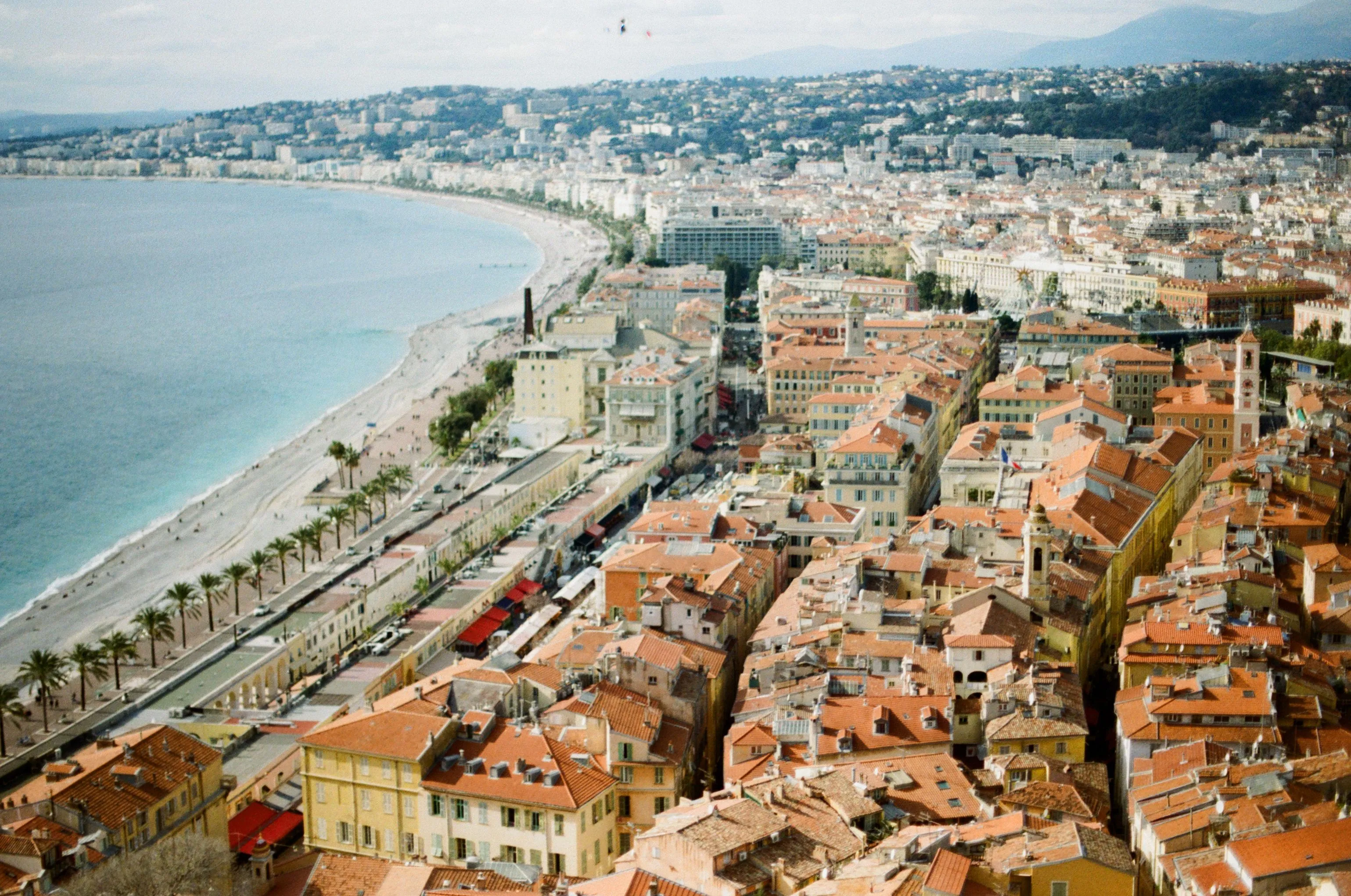
One seafront base, every climb within reach. Where you sleep is half the plan.
The Col d'Èze · one last classic
The Paris-Nice time-trial climb, straight out of the city and done by noon.
Sunday is built around the flight. The Col d'Èze is the perfect closer: it starts almost in the city, tops out at 507 metres in under ten kilometres, and you can be back on the Promenade with time to spare.
This is the climb that decided Paris-Nice for decades as the race's final time trial, and it still carries that history. The first ramps out of town are the steepest, kicking to 8–9% among the traffic lights; then it settles into a winding, consistent 5% with the coastline unrolling below and the village of Èze on its crag ahead. Sean Kelly won the time trial here five times. You won't, but the road doesn't know that.
From the top, continue up to La Turbie, fill the bottles at the fountain where half the region's pros seem to end up mid-morning, and, if there's an hour spare, detour to Fort de la Revère for one of the best viewpoints on the coast: Monaco, Cap Ferrat and the sea laid out beneath you. Descend the Grande Corniche back into Nice, shower, and make the airport. The bike box can wait until you're home.

Why people come back
The density is the answer. Nowhere else puts benchmark climbs, wild backcountry and a flat coastal recovery spin within a few kilometres of the same espresso, with an airport on the seafront that makes a long weekend genuinely worth the flights.
Most riders come first for the Madone and return for everything around it. The coast is the postcard, but it's the arrière-pays, the empty roads above Vence and the balcony routes through the gorges, that turns a trip into a habit. And the climate keeps it open when the Alps are shut: you can ride here in February.
Then there's the company. Ride any of these roads on a weekday morning and you'll share them with the peloton that calls this coast home. The town holds up too: small enough to know in a weekend, good enough to make the evenings matter.
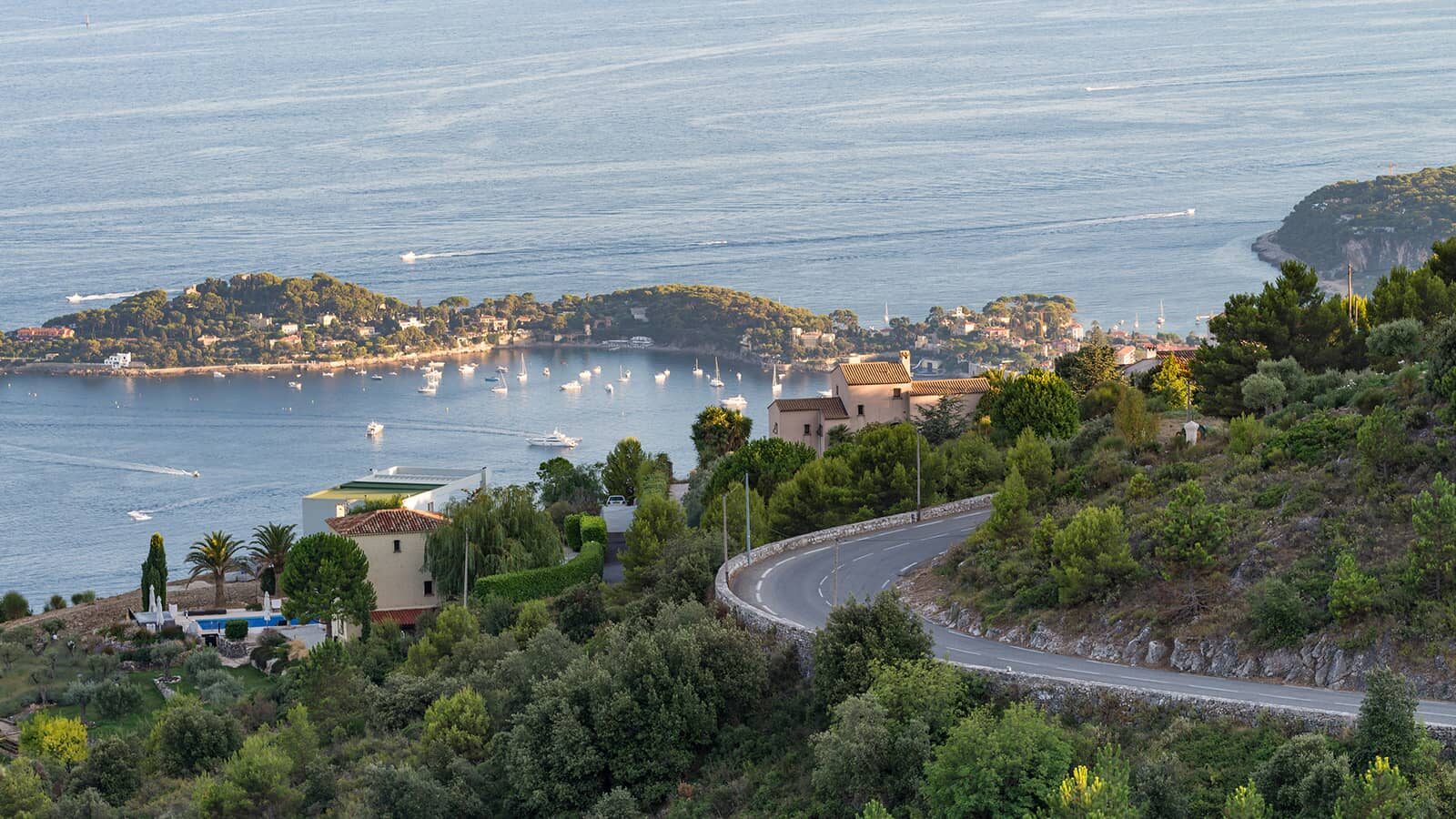
Everything worth knowing before you land
Six things that make a Nice weekend run smoothly.