Half the WorldTour lives here for a reason. Quiet roads, an airport an hour away, a medieval old town small enough to cross in an espresso. Seven days is what a normal rider needs to feel the shape of the place, and to leave fitter than they arrived. Here's how to spend them.
"The pros didn't move here for the mountains. They moved here for the mornings."
A week in Girona isn't a menu of climbs, it's a training block dressed up as a holiday. The roads are quiet, the surfaces are honest, and the profile of any given morning is whatever you decide to make it. What most riders come here to do, and what the pros do every winter, is stack aerobic hours: long, steady, mostly Zone 2, with sharp intervals dropped in on the days the legs allow. This guide takes that logic and turns it into seven days. Two hard, two long, one short, one recovery, and one that is nothing more than a café loop with friends. The place does the rest.
Arriving in Girona
Barcelona airport, then a train. That's the whole trick. The AVE from Barcelona-Sants to Girona takes thirty-eight minutes, runs hourly, and drops you a fifteen-minute walk from the old town. Bike bags travel free. There is a smaller airport in Girona itself, served mostly by Ryanair, which shortens the transfer but limits your route options.
If you're bringing your own bike, the train is cheaper, faster and less stressful than a taxi across Catalonia. If you're renting, book before the flight; the good fleets sell out in March, April and September.
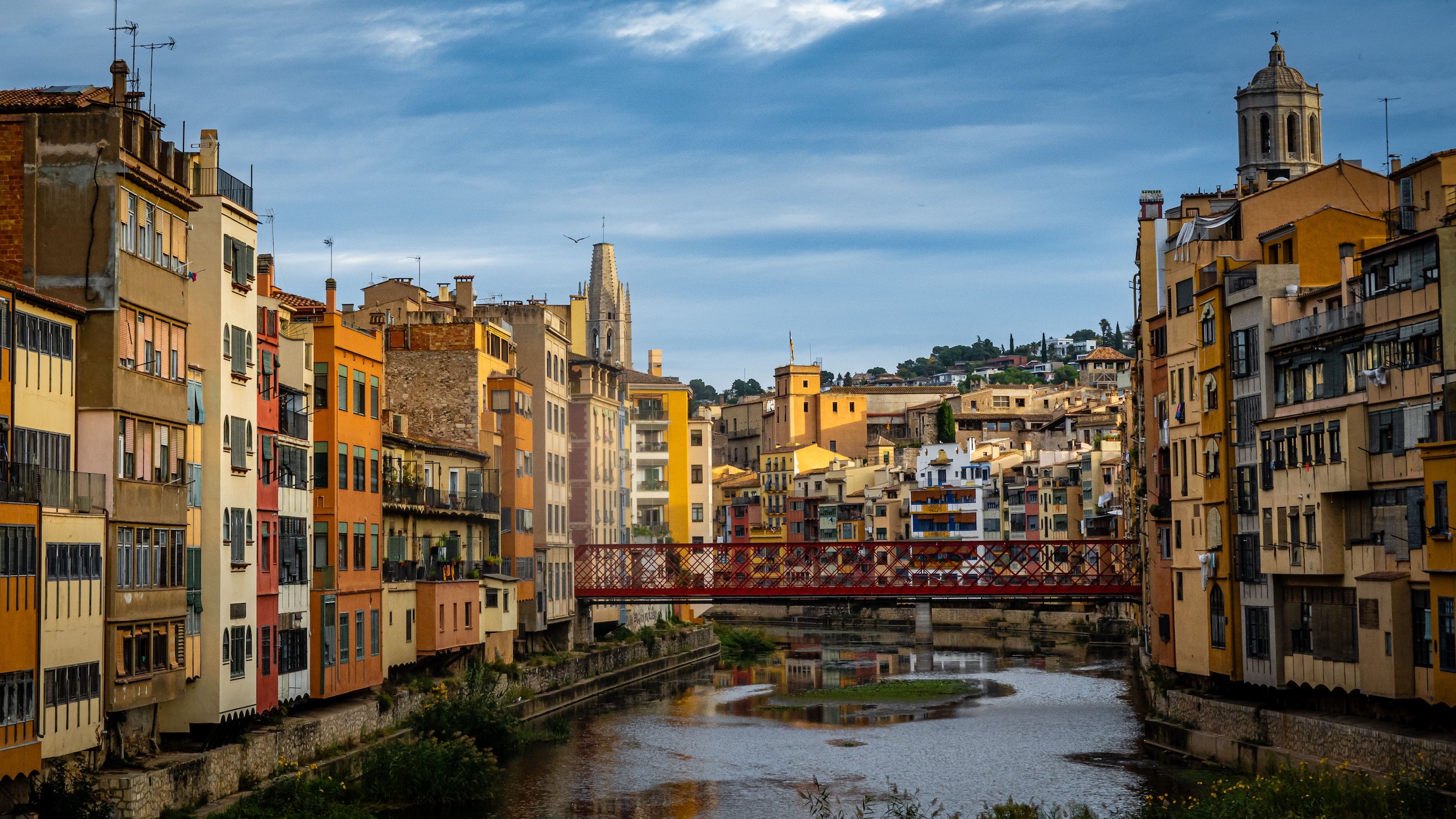
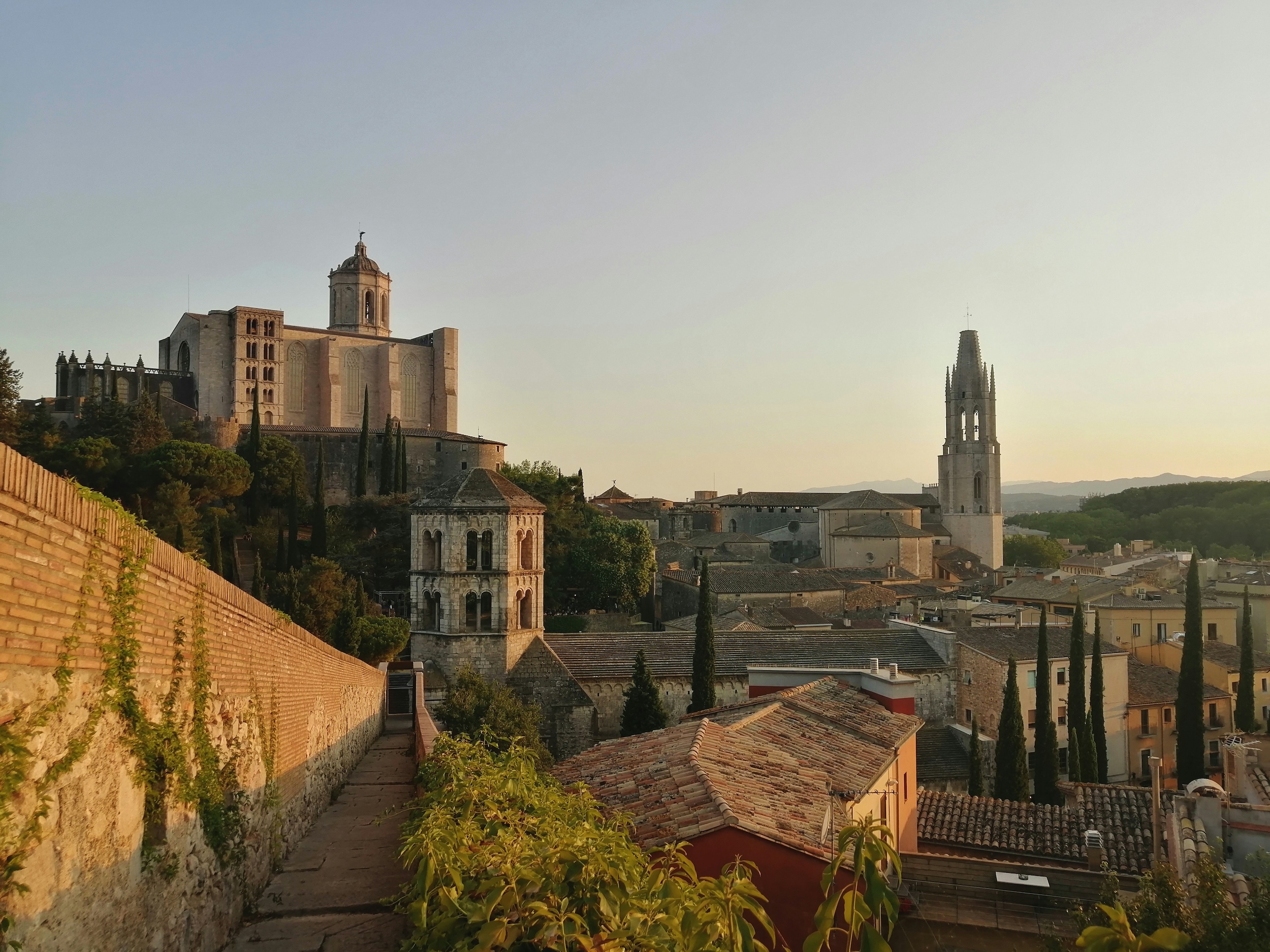
Girona itself takes an afternoon to learn. Roman walls, medieval quarter climbing the hill on one side of the Onyar, a flatter, quieter grid on the other. Cyclists concentrate in three or four cafés and one supermarket. You will start recognising faces by day three.
Where to base yourself
The old quarter is beautiful and central; the Devesa side is quieter and easier to roll out of. Neither is wrong. The variable that matters is how your bike sleeps and where your legs recover.
Bike rental
Girona is spoiled for choice on bike hire, which is part of why the peloton settled here. A curated selection below covers the three angles most riders want: the all-in-one café and rides shop, a guided-week package, and a straightforward premium concept store. Book at least a month out for March, April, September and October.
The Week
A big climbing day to open. A long coast ride to close. A sweetspot block and an over-under session threaded through the middle. Two proper recovery days between the hard efforts. Girona's rolling terrain does the rest.
The week is shaped around three anchor rides. Day 1 opens with a Rocacorba double ascent: one controlled, one full. Day 5 is over-unders on Els Àngels, the second hard session. Day 7 closes on the coast to Tossa de Mar, four hours of aerobic endurance on one of the great Mediterranean roads. What sits between is what makes the anchors work: a coffee-ride recovery on day 2, a sweetspot 2×30 in Les Gavarres on day 3, three hours steady on the Begur loop on day 4, and a genuine easy spin on day 6.
The point of the recovery days is that they're actually easy. Talking pace, no efforts, no chasing anyone up any small rise. Skipping them, or turning them into a "light Zone 2", is the single most common way training weeks stop working. The fitness is written in on the days you don't feel it.
Everything is movable. If Saturday's legs are heavy, one strong Rocacorba is still an excellent day. If the weather turns, over-unders and VO2 both work indoors. If the sleep score reads badly, swap intensity for extra endurance and come back to it. Girona rewards flexibility because the roads are so consistently good that you can't really make a wrong choice.
Rocacorba, twice
One ascent controlled, one full. Every pro who trains here has done this workout.
The signature Girona session, and the one that makes the rest of the week feel earned. Roll north out of the city for 18 kilometres on flat roads to Banyoles: that's your warm-up. Spin it, don't ride it. You'll want the legs.
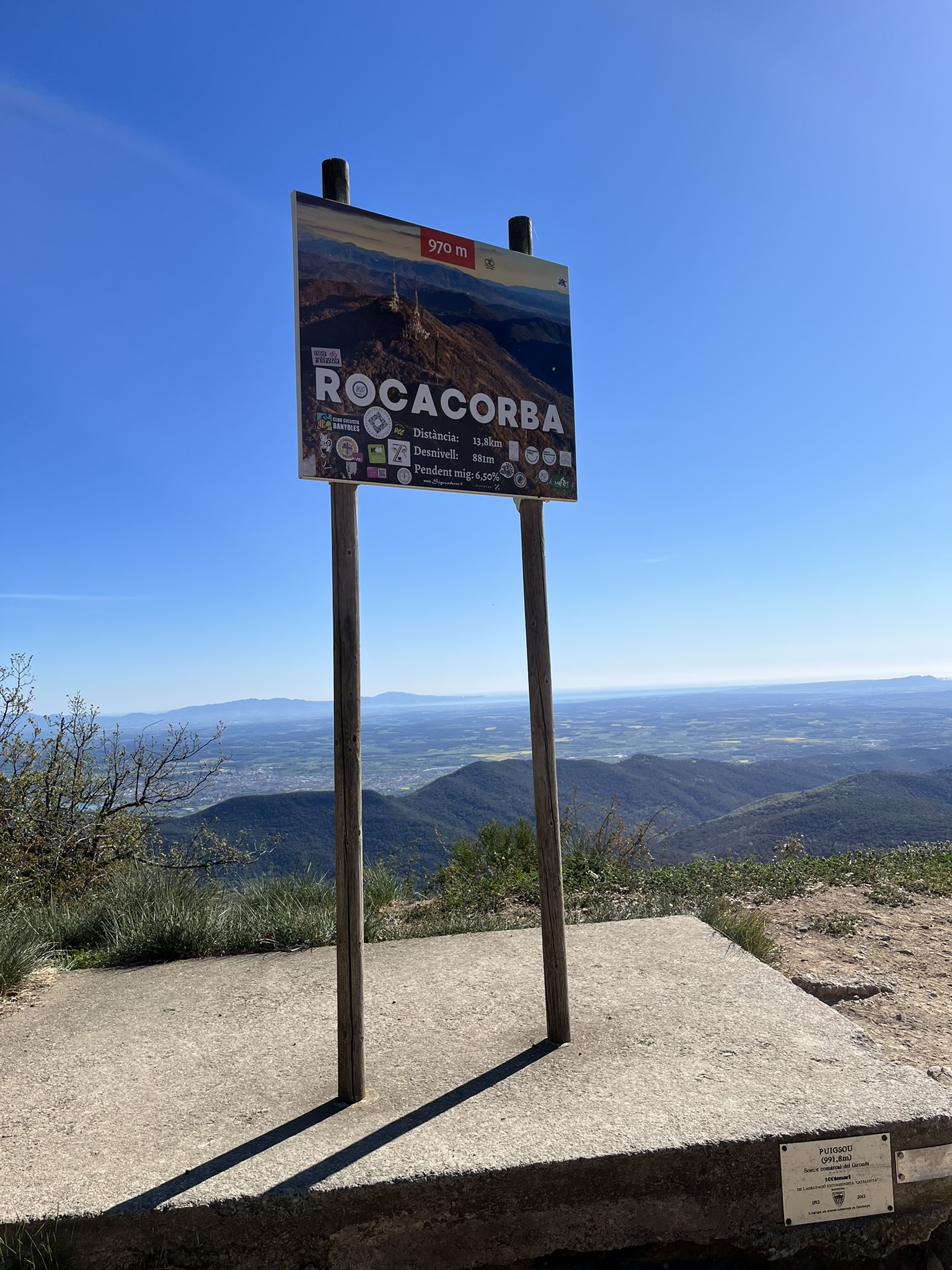
Then Rocacorba: 8.8 kilometres at 6.7% average, 593 metres of climbing. The climb itself burrows into pine forest and opens the whole Empordà plain at the summit. The first three kilometres are the steepest, so resist the temptation to attack from the bottom. Ride the first ascent controlled at 87–93% FTP. Hard, but sustainable all the way to the top.
Descend, then take a 45-minute endurance loop through Mieres and Amer in the lower Garrotxa foothills. Just enough to keep the legs turning without emptying them. Then back to the foot of Rocacorba for the second ascent, this one at 92–100% FTP. That's the benchmark. If you paced the first ascent, the second answers whether the fitness is where you think it is.
Barri Vell loop, then a coffee
Not really a ride. The ride is the excuse for the café.
Spin the old-city loop and go find a café. The Barri Vell route (cathedral, down to the river, back up) is only a few kilometres, but the cobbles wake the legs up in a way flat tarmac won't.
Keep it at talking pace the whole time, easy enough that you could hold a conversation without breaking a sentence. No efforts. If a small rise wants you to push, don't push. This is an Espresso Mafia or Café U Punt day. The coffee is the point of the ride; the ride is the excuse for the coffee. It's not negotiable.
If yesterday hurt more than it should have, cut it shorter. Nobody's counting.
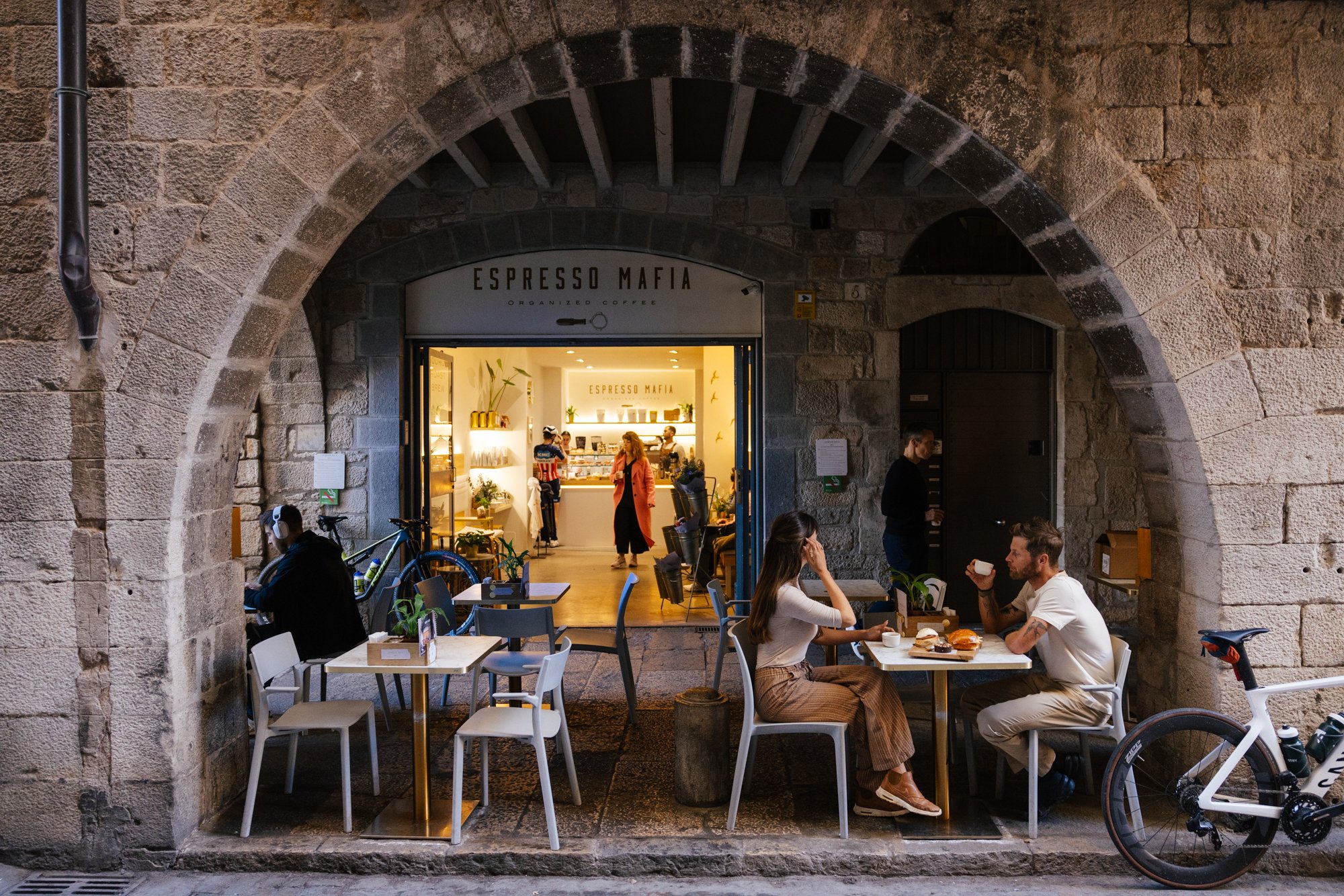
The best weeks start at the café down the road.
Sweetspot in the forest · steady, honest, over quickly
Two blocks of 30 minutes on a 3–4% gradient that never lets you cheat.
The Gavarres is the wooded ridge that separates Girona from the coast, quieter than any road you'd otherwise ride. Head south into Les Gavarres. The quiet forest roads on the Creus de Palol climb (or the road up towards Santa Pellaia) give you a steady 3–4% gradient: perfect for holding sweetspot without having to chase surges every corner.
Two blocks of thirty minutes, target 85–90% FTP for both. The ten-minute recovery spin between them slots into the rolling terrain naturally; roll down, roll back up, restart. Sustainable if you commit, uncomfortable if you drift. It's the kind of session where the last five minutes of the second block is where the fitness is written in.
Les Gavarres is what makes this workout worth doing outdoors. Cork oaks, dappled shade, a road surface that stays cool even in July, and enough silence that you'll hear your own breathing over your tyres. Half the reason to come to Girona is to do intervals somewhere that feels like a Sunday spin. This is that place.
Girona to Begur and back · rolling all day
Three hours on the coast. Panoramic, rolling, aerobic. Don't push the climbs.
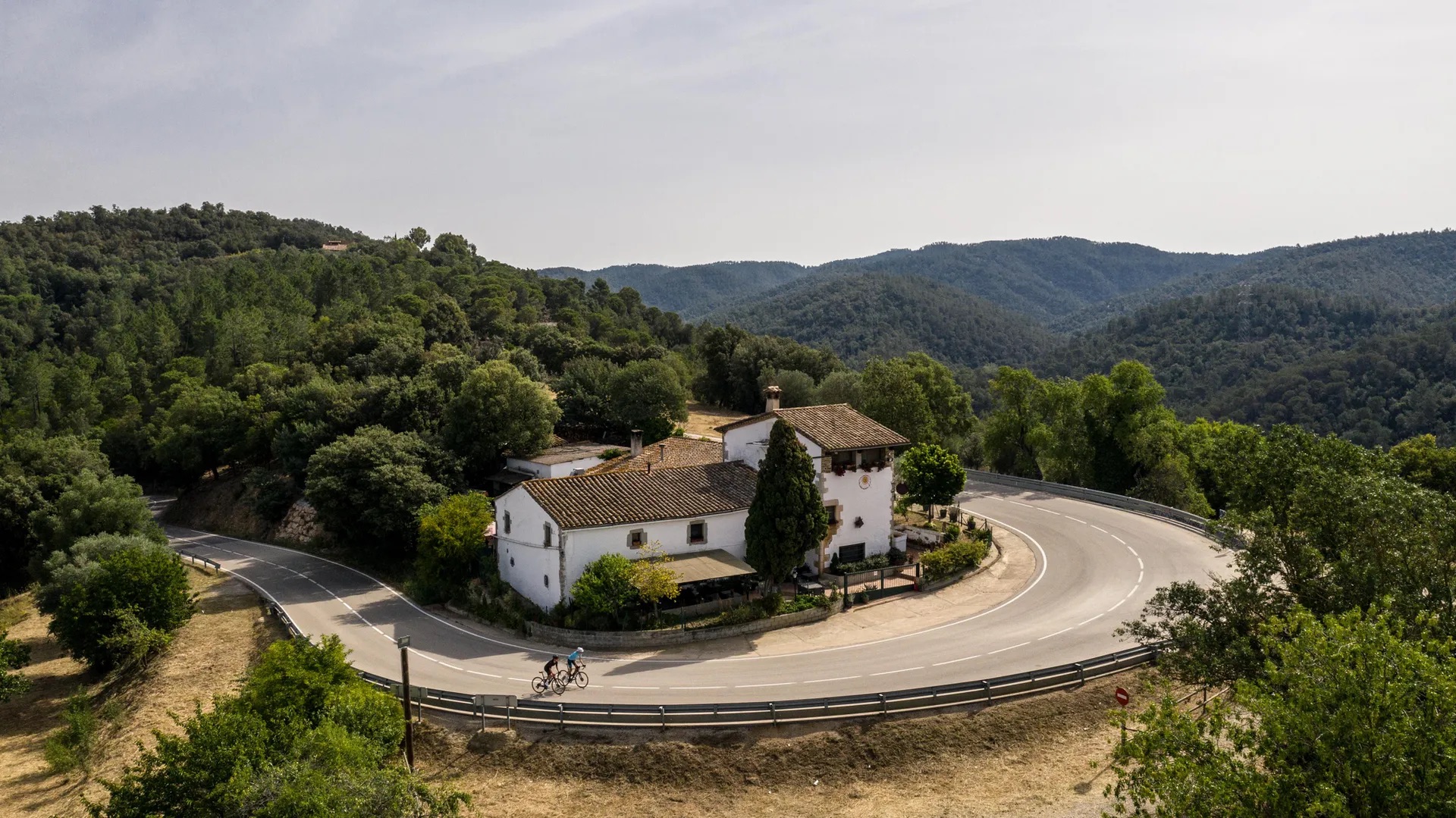
Head southeast: Girona to Llagostera, Platja d'Aro, Begur, Pals, then home. Between Platja d'Aro and Begur the road threads a string of cliffside coves, and the six-kilometre drag up to Begur earns you panoramic views over them. On the way home, Pals stands medieval and largely restored on a low hill, worth the detour if the legs allow. Nothing brutal in the profile, all rolling.
This is a Zone 2 aerobic day. After two hard sessions the temptation to push on the climbs will be real; resist it. The point of today is time in the saddle at a durable pace, not chasing PRs on a coast road that photographs better than it climbs.
Take food from the start. The route has fewer shops than the map suggests, and the coast section is where amateurs bonk. Eat before you're hungry.
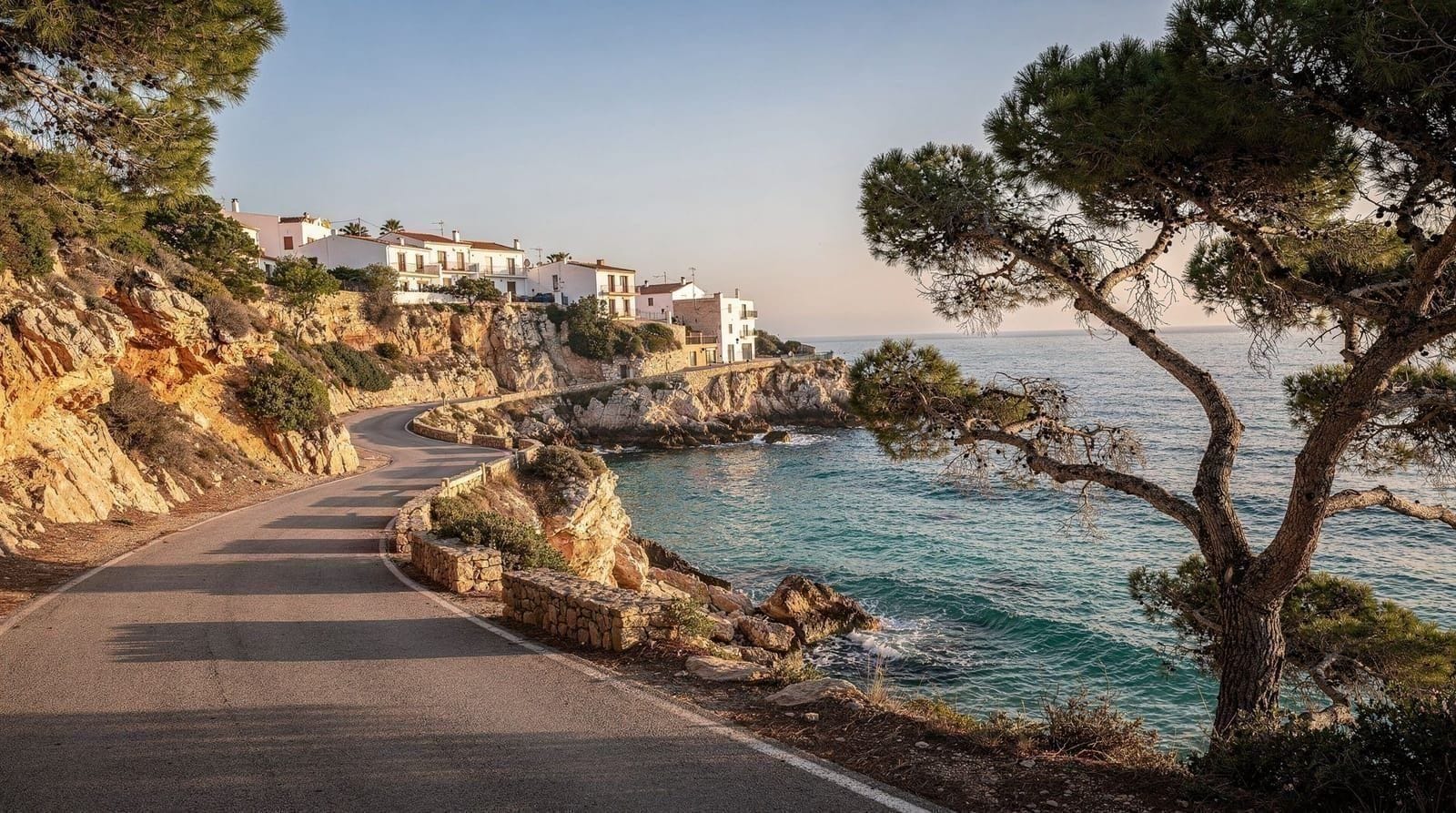
Push hard, hold harder · 6 × over-under
Two minutes above FTP, straight into three minutes at FTP. No rest between.
Six rounds of two minutes above FTP, straight into three minutes at FTP. No rest between the over and the under, that's the point. You learn to hold threshold when you're already breathing hard, which is the fitness you actually notice on a spicy group ride: the one where someone lifts the pace on a climb and you either come with them or you don't.
Warm up thirty minutes out of town via the road past the airport, then start the block at the base of Els Àngels. The climb rises through Mediterranean pine to a hilltop shrine looking across the Empordà plain to the sea. Ten kilometres at 4.6% average, and critically a gradient that stays consistent almost the whole way up. That's exactly what over-unders want: enough resistance to keep you honest on the "under", moderate enough that you can accelerate cleanly into the "over" without spinning out or losing traction.
The full climb takes 30–35 minutes, so the six-round block fits neatly inside the ascent. Café at the summit if the timing works, descend the same road, roll home Zone 2. Total around two hours.
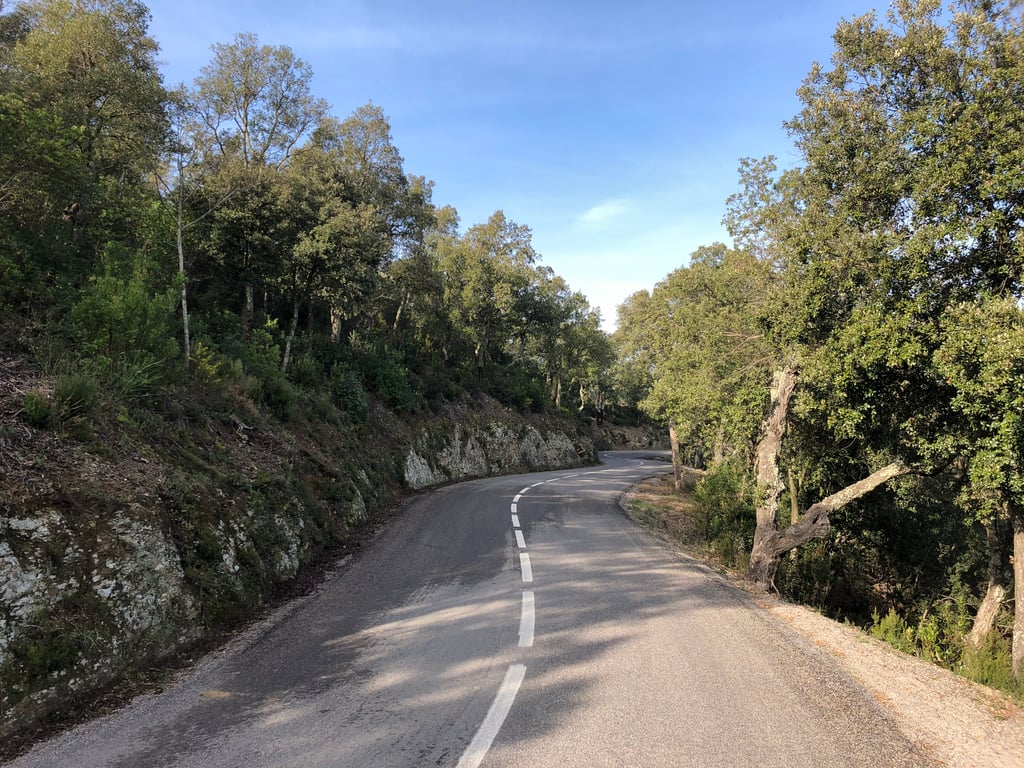
Els Àngels is twenty minutes from town, if you're based right.
Ter River path · truly easy
Flat roads only. No efforts. Tomorrow depends on today being boring.
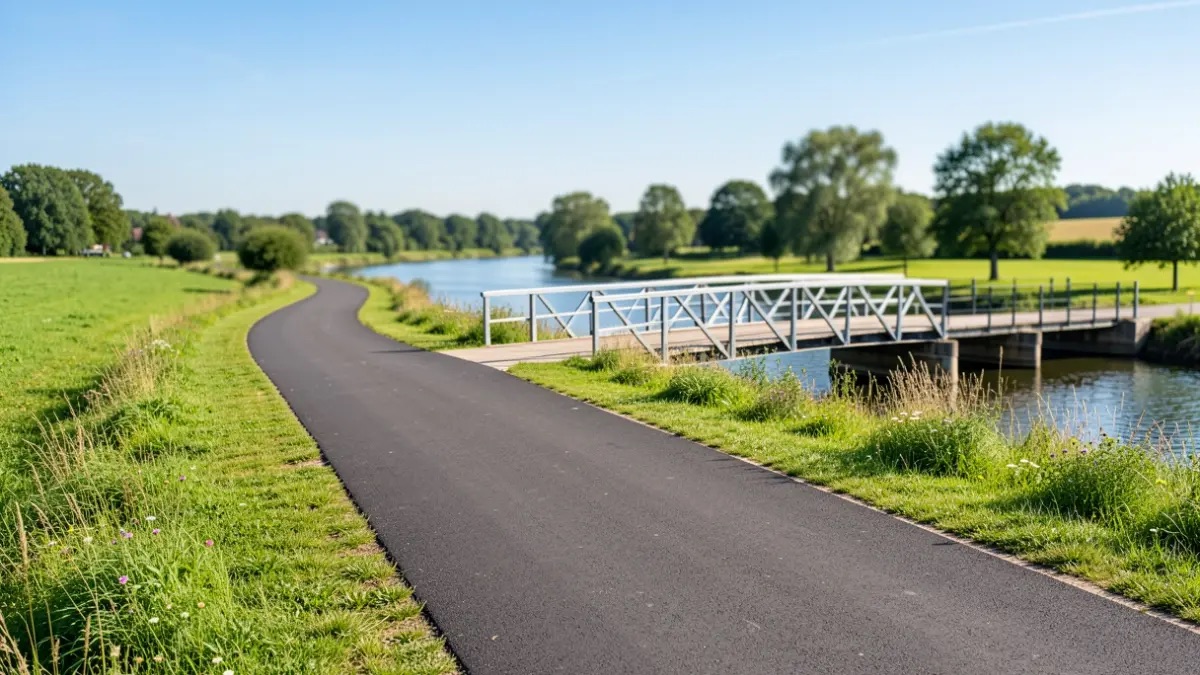
Flat roads only. The Ter River cycle path heading north towards Celrà and Sarrià de Ter runs through avenues of plane trees and market-garden fields, flat enough that you'll notice the birds over your own crank noise.
Keep it at conversational pace the whole time. No efforts of any kind. If a rise in the path wants you to push, gear down. This sets up tomorrow's ride, and tomorrow only lands if you've truly gone easy today.
Sit down for the rest of the afternoon. Long lunch, walk on flat ground, early night. Sleep is the interval.
Girona to Tossa · and back the same way
Four hours on the GI-682, one of the great Mediterranean cycling roads.
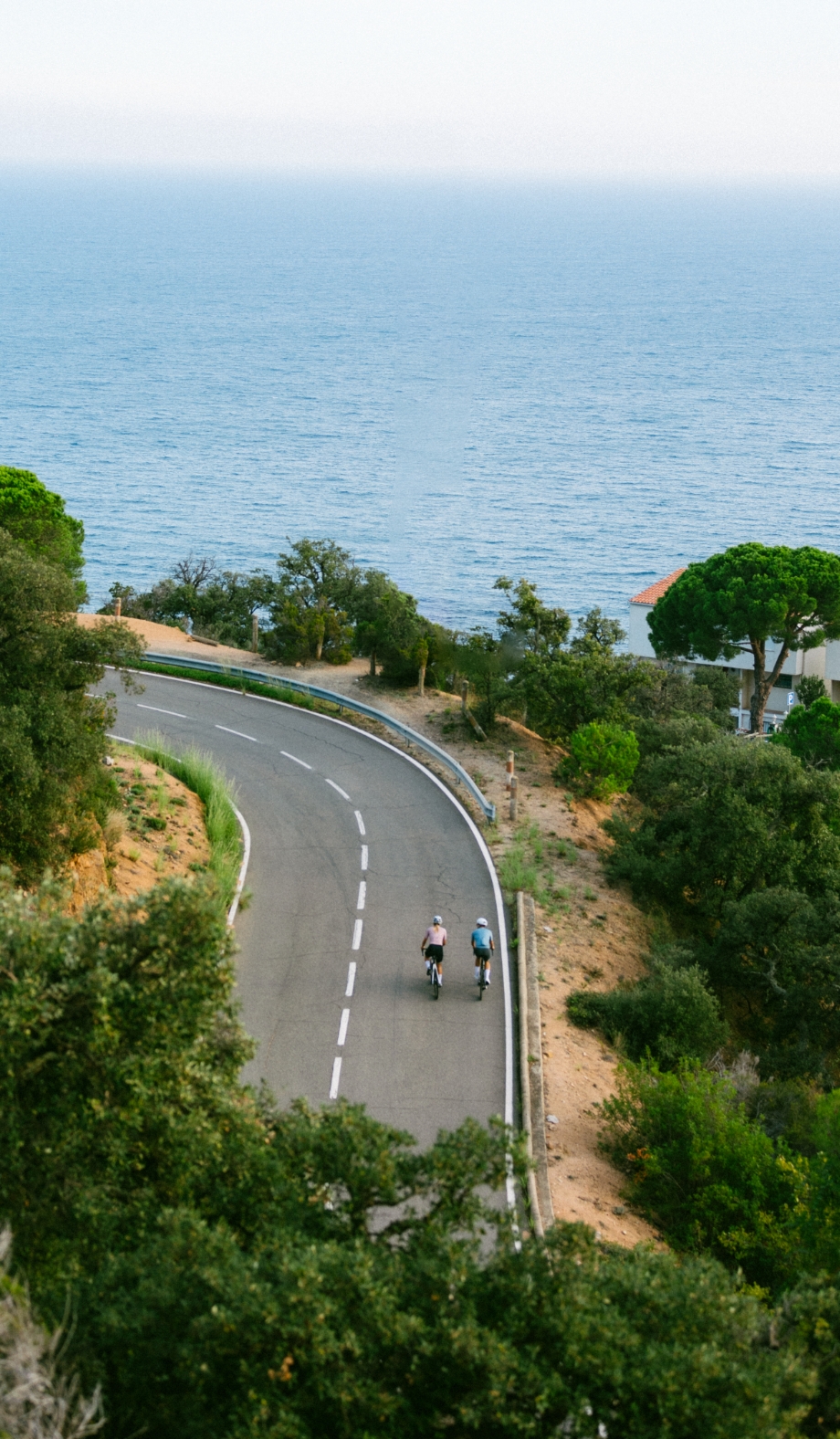
The right way to close the week. Roll south out of the city through Llagostera and down to the sea at Sant Feliu de Guíxols. From there, the GI-682 to Tossa de Mar: eighteen kilometres of cliffside, twisty, rolling road with the sea below and the Serralada Litoral rising to the right. It earns its spot on every "greatest coast roads" list in the first switchback.
Ride it Zone 2. The rollers on the GI-682 are punchy and the temptation to attack them will be constant; resist it. The point of today is time in the saddle at a durable pace, not chasing PRs on a road that photographs better than any Strava segment. Turn around in Tossa (proper coffee, something salty, refill the bottles) and come back the same way.
Fuelling matters more than pacing today. Four hours in Zone 2 is where under-fuelling shows up. 80–100 grams of carbohydrate an hour, eat before you're hungry, treat the Tossa stop as a mandatory photo and refuel. Cool down slowly on the way home. Long stretch, real dinner, book the next trip.
Why people come back
The training math is honest here. Roads that let you spend real hours in Zone 2 without stopping for traffic. Climbs consistent enough that intervals actually mean something. A recovery culture built into the day: sit-down coffees, long lunches, walks along the walls, real food. All of it inside a fifteen-kilometre radius of a walkable old town.
Most riders return in April, then again in October. Both are quiet peaks. The spring trip is where the season's shape gets built; the autumn trip is where the depth gets set for winter. The rides don't change much. The version of you riding them does.
Girona rewards the second visit. You already know the roads. You already know which café is worth the extra ten minutes. The week gets simpler, which means more of it is riding. That's the whole point.
Everything worth knowing before you land
Six tips that make your week worth it.