Nine thousand cyclists. Three distances. Seven Dolomite passes on the long route, all on closed roads. Here's how to plan the days around it: where to stay, how to recon the route, and how to arrive at the start line in the best shape of the week.
"Each mountain in the Dolomites is like a piece of art."
Le CorbusierThe Maratona dles Dolomites is the most famous granfondo in Italy and one of the biggest single-day rides anywhere in cycling. Nine thousand riders, three distances, seven Dolomite passes on the long route, all on closed roads on a single Sunday in early July.
Most riders arrive Thursday evening or Friday morning, ride a recon loop on Friday, collect kit on Saturday, race Sunday, and drive home Monday. Hotels in the start-area villages book out six months in advance and the long-course entry sells out faster than that.
The closest airports are Innsbruck (about two hours by car over the Brenner) and Venice Marco Polo (around three through the southern Dolomites). Munich and Verona add an hour each. Hire a car: the start village shuffles bike boxes badly, the roads close early on race morning, and buses don't take bike bags.
The route splits on the road after Pordoi and again after Falzarego, so the distance you ride is decided in the legs, not at registration. Picking where to stay is the first decision. Pacing is the second.

Corvara, the perfect base
Small enough to walk across in fifteen minutes, the cycling-tourist heart of the Alta Badia. The start village for the Maratona is laid out on the football pitch a five-minute spin from any hotel in town. Two stays are worth knowing about.
A "small 4-star with a great soul," focusing on a quiet, regenerating, and professional yet family-like atmosphere. The kind of place where the owner remembers your name on day two.
See the bike-score breakdown on RideLodge →Hotel La Perla exudes mid-century charm. The flagship restaurant, Les Stües, recreates the feel of a "nonna's" dining room with checkered tablecloths and vintage plates hung on the walls.
See the bike-score breakdown on RideLodge →Find more bike-friendly hotels in Corvara →
Friday's ride is the leg-opener. The classic from Corvara is the half-Sellaronda: the same fifty-five kilometres and two thousand metres of climbing as the Maratona short course, ridden at conversation pace. Out east over Passo Gardena, down into Selva, back up Passo Sella, drop into Canazei, climb Passo Pordoi, descend to Arabba, and roll the small Passo Campolongo home.
Keep the heart rate down on every climb. Stop at the Coppi monument on Pordoi, eat a strudel at the summit, descend carefully.

Ride Friday's recon easy. The Dolomites feel different at altitude. Your lungs take two days to adjust. A hard Friday will ruin Sunday.
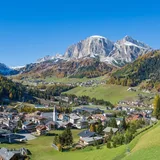
Thursday night in the valley for a Friday start. The good stays go first.
Saturday is logistics day dressed up as a cycling day. The shakedown spin exists to keep legs moving without loading them. Thirty kilometres, no hills worth mentioning, out toward La Villa and back along the valley floor.
Race registration opens the exhibition village in Corvara's main square. Check your number, confirm your wave, and spend twenty minutes walking the expo if you enjoy that. Buy nothing heavy to carry home.
Eat early and well. The best restaurant in the valley for a pre-race dinner is La Stüa de Michil inside La Perla hotel, but it books months ahead in race week. Have your backup planned before you arrive.
Lay your kit out tonight. Charge everything. Prepare two bidons. Set the alarm for five. You are done thinking about tomorrow. Let it come.

A fifteen-minute spin from the hotel gets you to the start village. Leave at five fifteen. Wear arm warmers and pack a gilet; the Pordoi descent at seven is cold enough to make hands clumsy on the brakes.
Campolongo comes within five minutes of the gun and sets the pacing test: six kilometres at six percent, addressed below. Pordoi is the longest sustained climb at over nine kilometres at seven percent, where the field finally strings out and the road climbs above the treeline. Sella and Gardena stack on top of each other through Canazei and Selva; short-course riders peel off at the top of Gardena and descend Campolongo to finish.
Medio and long-course riders push on through Falzarego and Valparola, the long ladder of switchbacks where the prosciutto sandwich at the Falzarego feed station is the one everyone remembers. Long-course riders then turn south, drop toward Cortina, and climb Passo Giau from Selva di Cadore: ten kilometres at nine percent average, nothing under seven, climbed already tired. Spin it. Pace it like a one-hour time trial. From the summit it's the descent to Cortina, the second crossing of Falzarego, the long roll-out through Valparola, and the finish on the main road in Corvara.

Don't go hard on Campolongo. The first climb sits five minutes from the gun and looks gentle on paper. With nine thousand riders bunched behind, the front of the wave attacks. Don't follow. The riders who paid for Campolongo are the ones cracked halfway up Pordoi. You'll meet them again on Sella.
The Giau Rule. Every rider who has done the Maratona more than once says the same thing: whatever you think you have left when you reach the bottom of Giau, divide by two. That is what you actually have. Pace accordingly: slow the cadence, eat early, don't chase the group in front.
Race-Day Essentials
The four things every Maratona rider gets asked about and the short answers worth carrying into Sunday morning.
34×34 if you have it. Giau's last four kilometres are where everyone wishes they'd swapped the cassette. Do it Thursday at the rental shop, not Saturday in the hotel garage.
The Pordoi descent at seven a.m. is cold enough to make hands clumsy on the brakes even when Corvara is twenty degrees. Stash a packable gilet, ditch later at the Falzarego feed.
Feed stations every twenty kilometres. Take a gel on Campolongo before the hunger hits. The prosciutto sandwich at Falzarego is the one everyone remembers, and the one the long-course riders need most.
You're assigned a wave by expected time and marshals enforce it. Your wave determines the size of the bunch you climb Campolongo with, and the experience of the first hour. Be in the pen early.
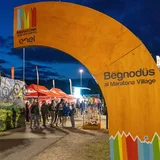
Gearing, kit, feeding, sorted. The bed's the last call.
Monday morning in Corvara after the Maratona is one of the quieter, stranger moments in cycling tourism. The nine thousand riders have compressed into this small valley for a week, and now the roads are yours again.
A short spin (thirty kilometres, no elevation) is enough to move the legs without asking them to do anything. Out toward Badia and back, at whatever pace feels comfortable, which on Monday morning will not be very fast.
Most people drive out on Monday afternoon. The better play is to stay one more night, find a terrace above the valley, and let lunch run long. A glass of the local red, the Sella group across the table, and legs that have nothing left to do but hold a stem.


Why you'll enter
the ballot again
The Maratona is not a race in the ordinary sense. The roads are closed, the mountains are at their most dramatic in July light, and nine thousand people have all made the same improbable decision to be there. There is a particular silence at the top of Giau (wind, nothing else) that arrives when you've been climbing for twenty minutes and the valley is somewhere far below.
Most riders who finish the long route start planning their return before they reach the finish arch. A few decide on the descent from Valparola, looking back at the route they've just ridden, that once is enough.
Most enter the ballot again in September.