Stelvio. Gavia. Mortirolo. Three climbs, one small town, no transfers required. Here's how to ride them properly, and how to make the most of everything between.
"You come here for the climbs. You come back for the valley."
Three passes. One valley. All of them reachable without a car transfer, all of them serious, and all of them within an hour of the same espresso. Bormio is not a complicated destination, it's a concentrated one. The Stelvio starts at the edge of town. The Mortirolo and Gavia sit southeast, close enough to roll to. Most riders arrive knowing the names. They leave knowing the gradients.
Arriving in the Valley
No direct flight exists. From most of Europe: fly into Milan Malpensa or Bergamo, then drive three to four hours northeast. Or train to Tirano and take the BusPerego connection up the Valtellina: an hour, punctual, cheap, and it drops you in the centre of town.
If you're hiring a bike in Bormio, the bus works fine. If you're travelling with your own, drive. From Innsbruck: two and a half hours over the Reschen Pass, worth noting if the road is part of the point.
Bormio takes about half a day to understand. Medieval centre, clock tower, Roman thermal spa at one end. Cycling hotels along the river Adda at the other. From any of them, the Stelvio's lower ramps are under ten minutes from the door.

Where to base yourself
Three serious bike hotels in town. All within easy reach of the Stelvio. What separates them isn't star rating. It's whether your bike is safe, your kit is dry by morning, and your legs have somewhere to properly recover.
Bike rental
Three shops. All capable. Book ahead. July and August move fast, particularly on frame sizes and compact gearing. Don't leave it until the morning you arrive.
The Rides
Three climbs, in the order a body handles them best. Stelvio on fresh legs, because nothing else in the valley deserves them more. Mortirolo or Gavia on day two, depending on what you came for. A quieter loop on day three that pretends to be recovery until the last kilometre.
The order matters more than the mileage. Save the hardest gradients for the day your legs are cleanest, and the altitude for the day after you've learned how the valley's weather actually behaves. The lakes ride on day three isn't padding: it's the day the trip becomes about the place, not the profile.
You can shuffle the sequence if the weather forces it. You'll finish more tired than you planned to either way.
The Stelvio · start here
South face from Bormio. Fresh legs, get it done.
Start with the Stelvio. The legs are fresh, the south face from Bormio is the quieter of the two sides, and getting it done on day one opens up the rest of the week.
From town: 1,500 metres of climbing over 21 kilometres. The lower slopes are forgiving. A string of tunnels cut by Austro-Hungarian engineers in the 1820s keep the gradient manageable through the first ten kilometres. It tightens above Bagni Vecchi. By kilometre fifteen the switchbacks are consistent and the air is noticeably thinner. The summit at 2,758 metres has a rifugio. Stop there. Eat. Put the jacket on before you start the descent. The temperature gap between summit and valley can hit 20°C, and the descent takes close to an hour.
That evening: pizzoccheri. Buckwheat pasta, cabbage, potato, Bitto cheese. The Valtellina's non-negotiable dish. Order it. Sleep early.

Mortirolo or Gavia · pick one, ride it properly
Short and savage, or long and remote. Not both.
Short and savage, or long and remote. Pick one.
The Mortirolo from Mazzo di Valtellina: 12.5 kilometres, 10.5% average, with extended sections above 15%. The average flatters it. It's the relentlessness, kilometre after kilometre of gradient that never quite eases, that makes it harder than either the Stelvio or Gavia for most riders. At kilometre seven, a stone monument marks where Pantani attacked in 1994. Most riders stop there. Most of them are also at their limit. Start in the small ring and stay there. The riders who go out ambitious in the first kilometres are the ones who reduce to counting metres, not switchbacks.
The Gavia: 25.6 kilometres, 1,400 metres, a road that narrows to single-track in places and passes through an unlit tunnel near the summit. Less brutal than the Mortirolo, more exposed. Andy Hampsten rode it in a snowstorm in 1988, went clear on the descent, and took the Giro. The road still carries that weight. In good conditions it's quiet and serious. In bad conditions, you'll understand the story without an explanation.
Doing both in one day is a mistake. The second climb happens without legs, and the fatigue bleeds into the days that follow.

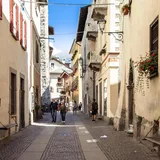
One base, every climb. Where you sleep is the whole plan.
The Lakes of Cancano · no traffic, no pressure
Car-free switchbacks to a high plateau. The day people skip and shouldn't.
The road to the Lakes of Cancano is closed to motor vehicles. That single fact makes it one of the best rides in the valley.
Nine kilometres up to a high plateau with two reservoirs. No traffic, no pressure, no agenda. There's a small bar at the dam. Stop, have a coffee, turn around. The whole morning is done by noon. After two days on the Stelvio and the Mortirolo or Gavia, this is exactly what the body needs: enough movement to aid recovery, not enough to compromise the days after.
The alternative: Santa Caterina Valfurva: rolling, quiet, extendable as far as the Forni glacier viewpoint if the legs want distance. Either way, the afternoon is free. Walk the old town. Book an evening at Bagni Vecchi or QC Terme. The thermal springs have been in use since Roman times and do what recovery sessions should. The riders who skip day three arrive home more depleted than necessary. Don't skip day three.
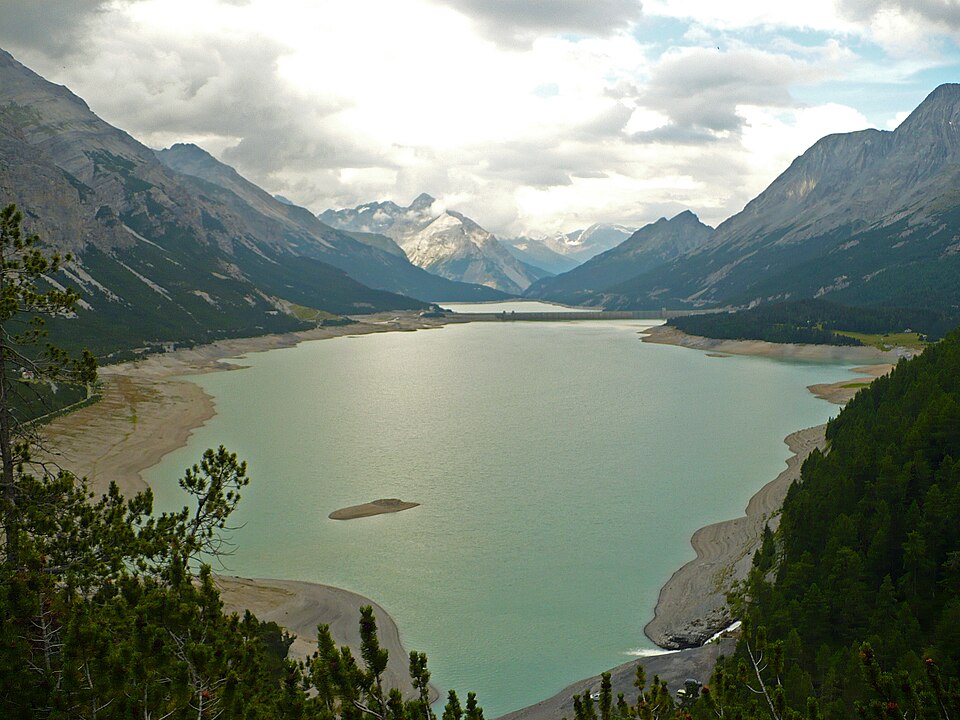
Why people come back
The access is the answer. Three climbs of genuine significance, all reachable from one base, no hotel changes between days. The logistics don't get in the way. Which means the riding can.
Most riders return for the Mortirolo. The Stelvio becomes a known quantity after the first visit. The Mortirolo doesn't. It rewards a closer reading of where the hard sections actually are, and that understanding takes more than one attempt. The Gavia changes with the weather and earns repeat visits for different reasons.
The town holds up too. Small enough to know quickly, good enough to make the evenings worthwhile. That combination is rarer than it should be.
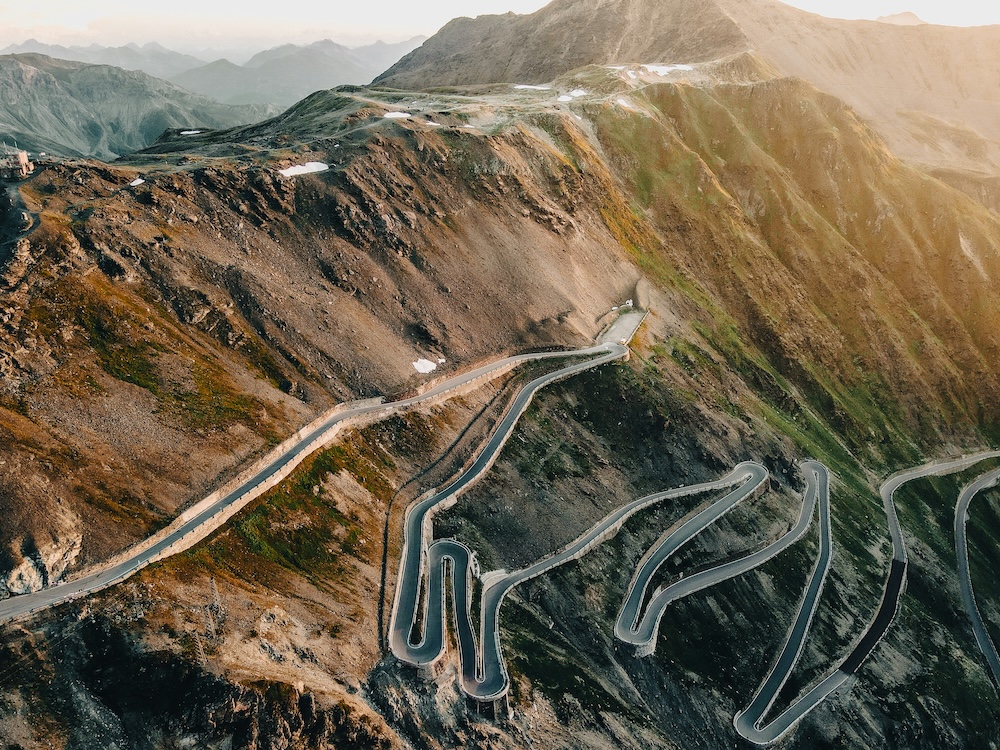
Everything worth knowing before you land
Six tips that make your week worth it.